
You have no items in your shopping cart.
Featured
Description
Research Area
Product Categories/Research Area,Product Categories/Antibodies,Epigenetics,Product Categories/Products/Antibodies/Primary Antibodies,Developmental Biology,Product Categories/Products/Antibodies
Images & Validation
−


Item 1 of 3
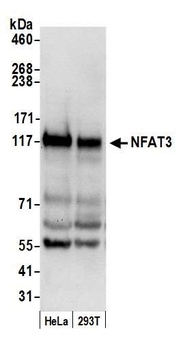
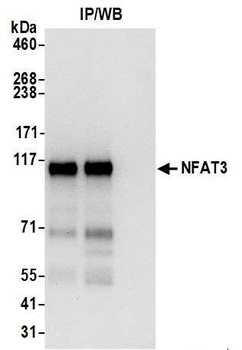
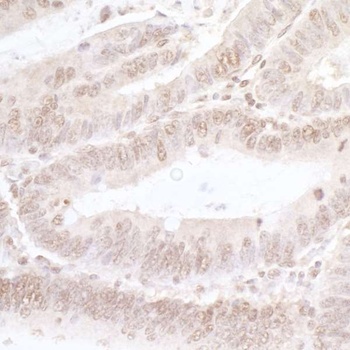
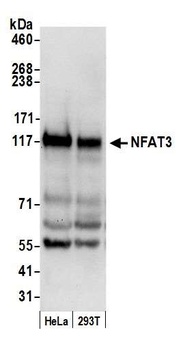
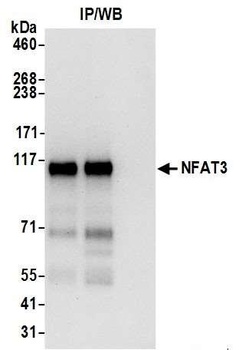
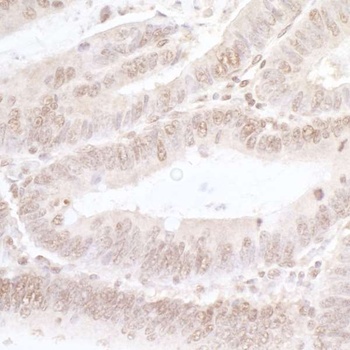
| Tested Applications | IF, IH, WB |
|---|---|
| Dilution Range | WB: 1-500:1000, IHC-P: 1-100:200, IF/ICC: 1-100:500 |
| Reactivity | Human |
Key Properties
−| Antibody Type | Primary Antibody |
|---|---|
| Host | Rabbit |
| Clonality | Polyclonal |
| Immunogen | KLH-conjugated synthetic peptide encompassing a sequence within the C-term region of human NFAT3. The exact sequence is proprietary. |
| Target | NFATC4 |
| Conjugation | Unconjugated |
Storage & Handling
−| Storage | Maintain refrigerated at 2-8°C for up to 2 weeks. For long term storage store at -20°C in small aliquots to prevent freeze-thaw cycles. |
|---|---|
| Buffer/Preservatives | Liquid in 0.42% Potassium phosphate, 0.87% Sodium chloride, pH 7.3, 30% glycerol, and 0.01% sodium azide. |
| Expiration Date | 12 months from date of receipt. |
| Disclaimer | For research use only |
Alternative Names
−anti NFAT3 antibody, anti Nuclear factor of activated T-cells, cytoplasmic 4 antibody, anti NF-ATc4 antibody, anti NFATc4 antibody, anti T-cell transcription factor NFAT3 antibody, anti NF-AT3 antibody
Similar Products
−- Item 1 of 3
Anti-NFAT3 (Phospho-S676) Antibody [orb256717]
IF, IH, WB
Human, Mouse
Rabbit
Polyclonal
Unconjugated
200 μl, 100 μl, 30 μl - Item 1 of 4
- Item 1 of 3
Rabbit anti-NFAT3 Antibody, Affinity Purified [orb1526023]
IHC, IP, WB
Human
Rabbit
Polyclonal
Unconjugated
2 μg - Item 1 of 3
Rabbit anti-NFAT3 Antibody, Affinity Purified [orb1526024]
IHC, IP, WB
Human
Rabbit
Polyclonal
Unconjugated
20 μg - Item 1 of 3
NFATc4 (phospho Ser168/S170) rabbit pAb [orb769245]
ELISA, IHC-P, WB
Human, Mouse
Polyclonal
Unconjugated
100 μl, 50 μl





Quality Guarantee
Explore bioreagents carefree to elevate your research. All our products are rigorously tested for performance. If a product does not perform as described on its datasheet, our scientific support team will provide expert troubleshooting, a prompt replacement, or a refund. For full details, please see our Terms & Conditions and Buying Guide. Contact us at [email protected].
Protocol Information
WB
Western Blot (IB, immunoblot)
IF
Immunofluorescence
Su, Feifei et al. Recombinant high‑mobility group box 1 induces cardiomyocyte hypertrophy by regulating the 14‑3‑3η, PI3K and nuclear factor of activated T cells signaling pathways Mol Med Rep, 23, 214 (2021)
Available Sizes
Select a size below
Choose Conjugation or Carrier Free Version
Free Secondary Antibody (20 ul)0/0
Please add an antibody product to your cart first.
 Usually dispatched within 5-10 working days