
You have no items in your shopping cart.
Custom Functional Membrane Protein Expression Services
Overcoming structural bottlenecks. High-yield, native-conformation preparation of recombinant GPCRs, Ion Channels, Transporters, and ECDs.
The Challenge: Overcoming Expression Bottlenecks in Complex Targets
Transmembrane proteins (TPs) represent a critical class of therapeutic targets, governing cellular signaling, transport, and recognition. Because their dysfunction is linked to severe pathologies, they constitute more than half of all approved drug targets and nearly 90% of antibody-based therapeutics.
However, isolating and characterizing these targets presents significant technical hurdles. Their highly hydrophobic transmembrane domains make maintaining native structural conformations in vitro challenging, frequently resulting in aggregation, misfolding, and suboptimal recombinant protein yields. Biorbyt addresses these bottlenecks through optimized expression platforms designed to stabilize complex proteins for structural biology and assay development.
Optimized Expression & Purification Solutions
Utilizing high-density HEK293 serum-free mammalian expression systems, we minimize host cell contamination while ensuring accurate post-translational modifications. Depending on target topology (single-pass vs. multi-pass), we deploy 7 specialized technological platforms.
.png)
Overview: Technology Comparison & Applications
Category | Platform | Mechanism / Format | Optimal Downstream Applications |
|---|---|---|---|
Single-Pass | Extra Cellular Domain (ECD) | Secreted functional domains. (1,000+ stock recombinant targets available). | Binding kinetics, In vitro functional assays, SPR. |
Multi-Pass (Purified) | Synthetic Nanodisc | Specialized polymers wrap hydrophobic regions, reorganizing native phospholipids. | Cryo-EM, Structural Biology, High-resolution SPR. |
MSP Nanodisc | Membrane Scaffold Proteins (MSP) wrap artificial phospholipids around the target. | Biochemical assays, NMR. | |
PeptiNanodisc | Designed peptides shield hydrophobic domains in an aqueous environment. | ELISA, Functional screening. | |
Detergent | Amphipathic molecules form micelles for solubilization. | Initial target extraction, crystallization. | |
Multi-Pass (Non-Purified) | Membrane Nanoparticles (MNP) | Utilizes intact cell membranes for high biocompatibility. Highly stable. | FACS, ELISA, Cell-based assays. |
Virus-Like Particles (VLP) | Self-assembling nanoparticles (100-150nm) embedding the target in a native bilayer. | Immunogens for antibody discovery, CAR-T. | |
Exosomes (EXO) | 30-150nm natural membrane vesicles released via plasma membrane fusion. | Therapeutic delivery tracking, Native functional assays. |
Validated Membrane Protein Expression Case Studies
Explore extensive functional validation data for highly complex transmembrane recombinant targets across our standardized platforms. Biorbyt ensures optimized preparation workflows designed to stabilize target conformation for robust assay development and therapeutic lead molecule screening.
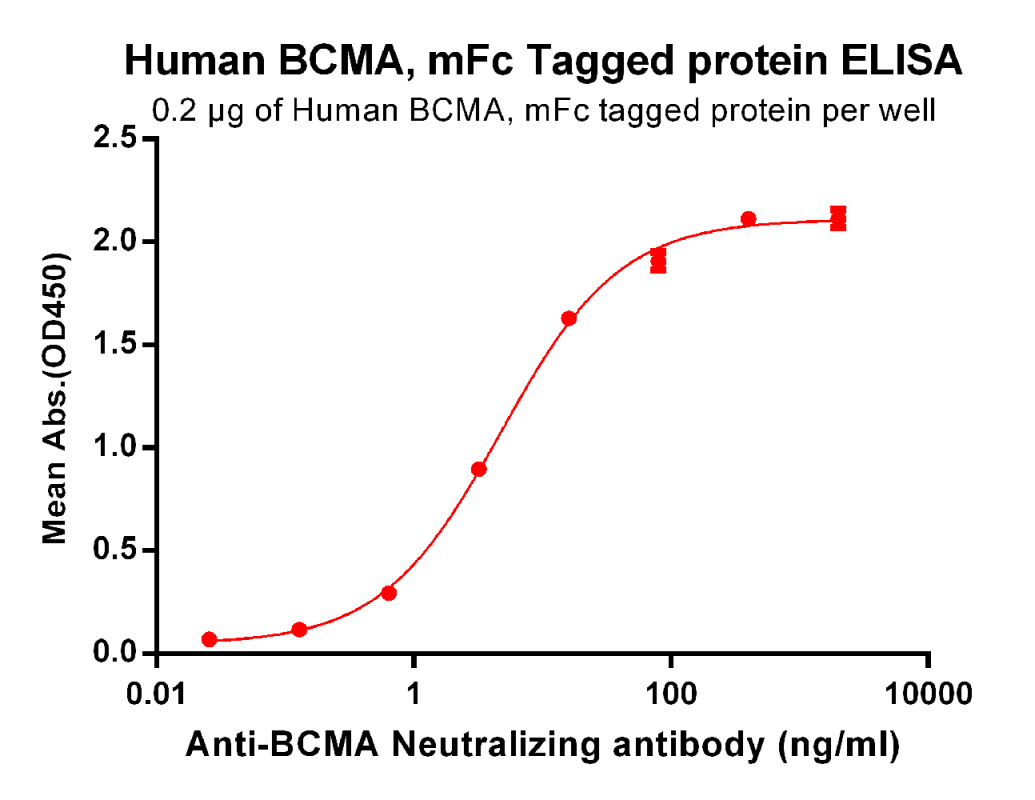
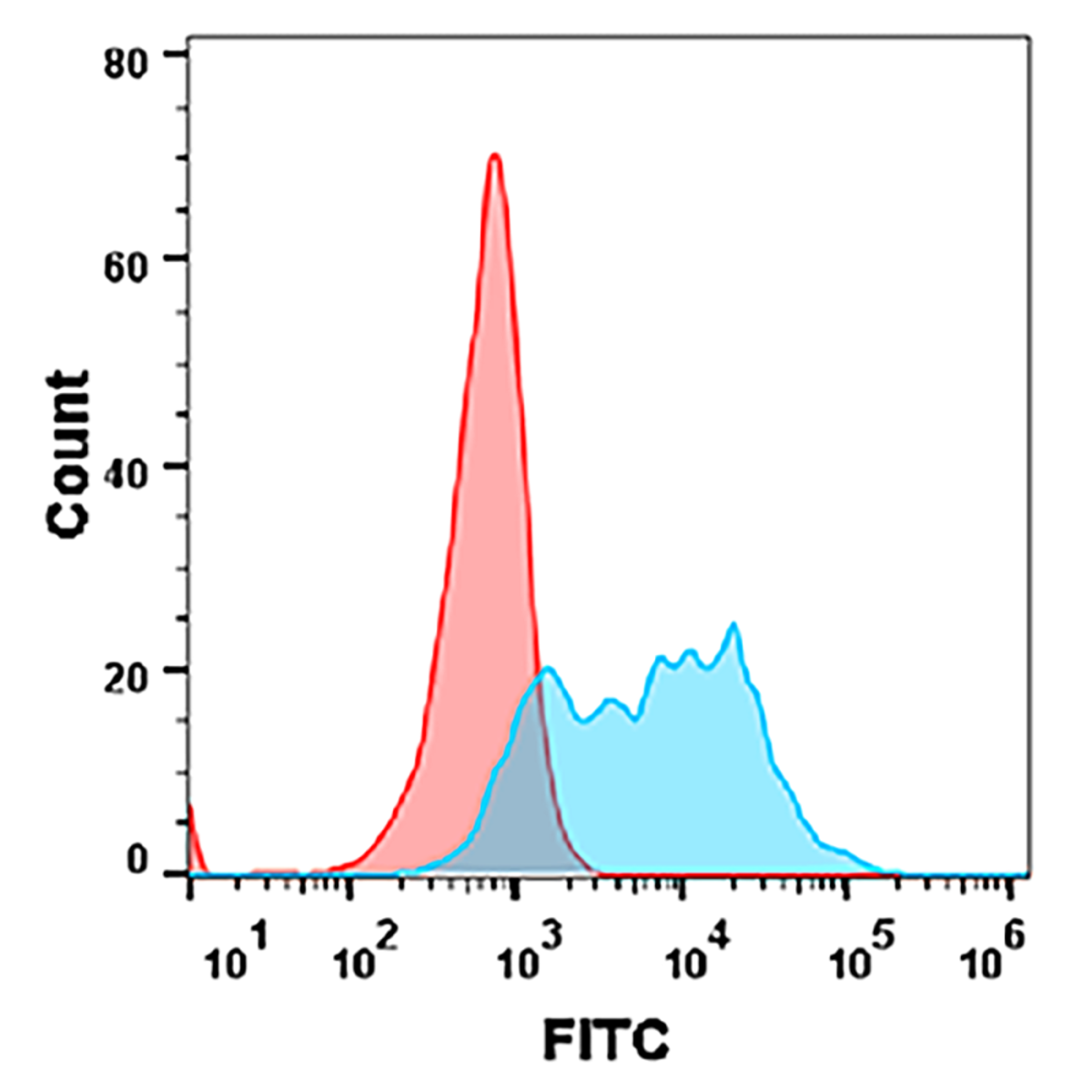
Human BCMA Protein, mFc Tag (orb689396)
Human GPRC5D full length protein-synthetic nanodisc (orb1291763)
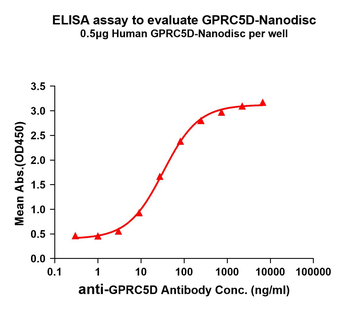
ELISA Assay: Elisa plates were added with Flag Tag GPRC5D-Nanodisc (0.5 μg/per well) on an anti-Flag monoclonal antibody pre-coated (0.5 μg/per well) plate. Serial diluted anti-GPRC5D monoclonal antibody solutions were added, washed, and incubated with secondary antibody before Elisa reading. From above data, the EC50 for anti-GPRC5D monoclonal antibody binding with GPRC5D-Nanodisc is 32.86 ng/ml.
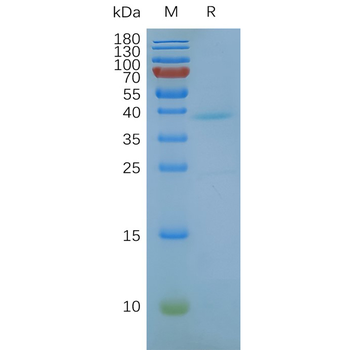
Human GPRC5D-Nanodisc, Flag Tag on SDS-PAGE
Human AQP5 full length protein-PeptiNanodisc (orb3145502)
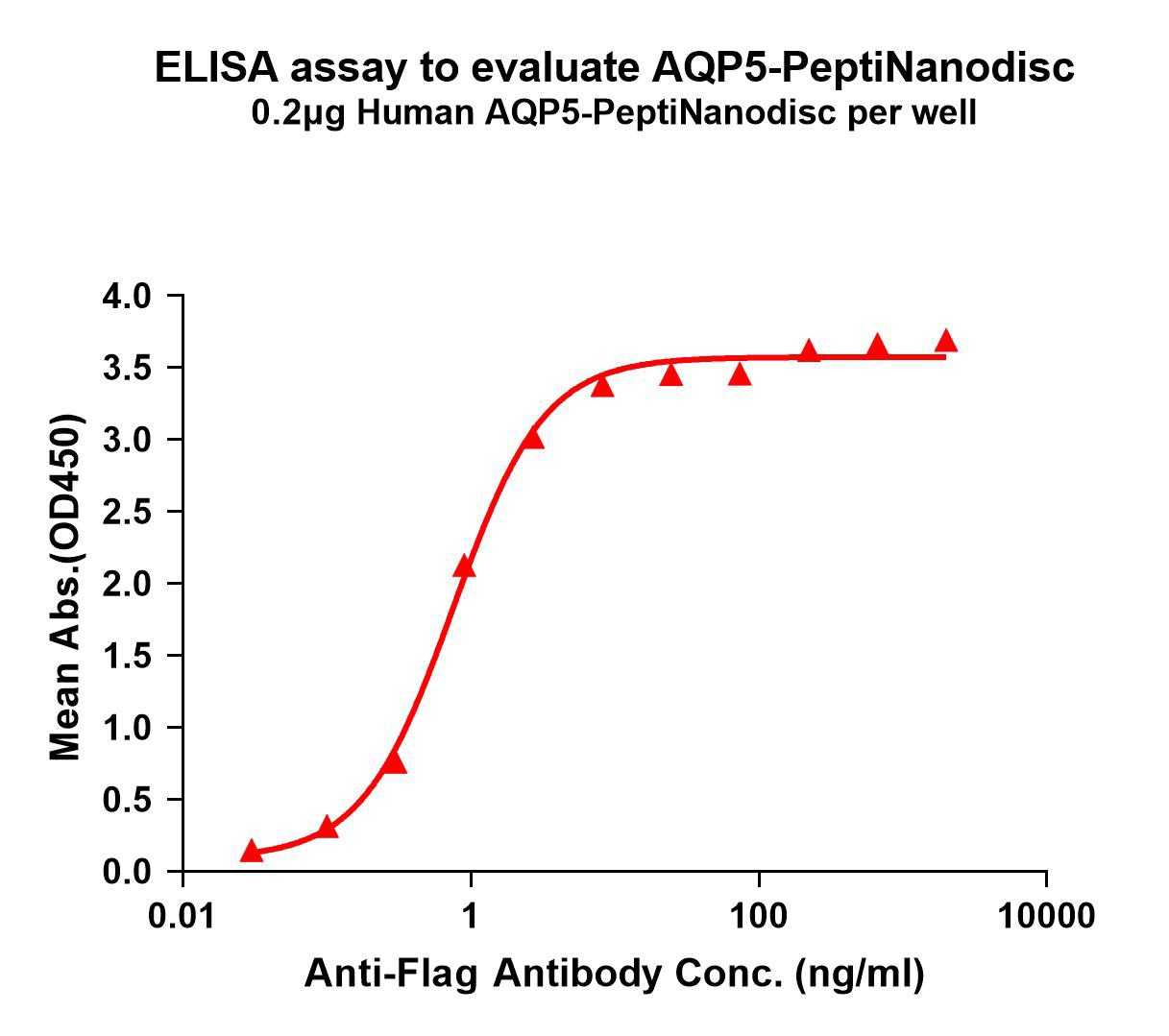
ELISA Binding: Elisa plates were pre-coated with C-Flag Tag AQP5-PeptiNanodisc (0.2μg/per well). Serial diluted anti-Flag monoclonal antibody solutions were added, washed, and incubated with secondary antibody before Elisa reading. From above data, the EC50 for anti-Flag monoclonal antibody binding with AQP5-PeptiNanodisc is 0.756ng/ml.
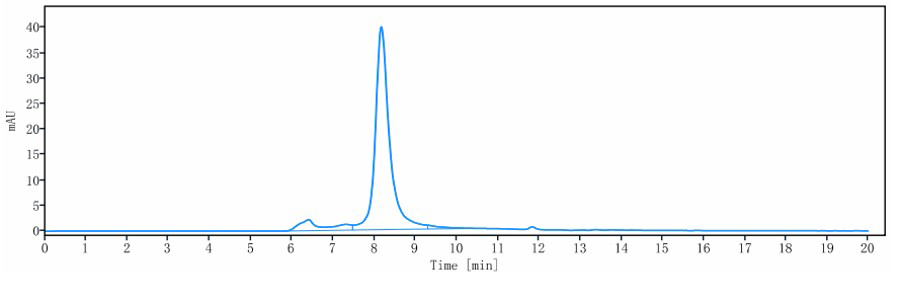
Purity Analysis: The purity of Human AQP5-PeptiNanodisc is greater than 90% as determined by SEC-HPLC.
Human Claudin-6 full length protein via MNP Platform (orb1291770)
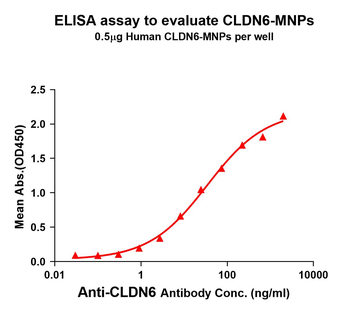
ELISA Binding: Elisa plates were pre-coated with 0.5 μg/per well purified human CLDN6 full length membrane nanoparticles. Serial diluted anti-CLDN6 monoclonal antibody (orb1291233) solutions were added, washed, and incubated with secondary antibody before Elisa reading. From above data, the EC50 for anti-CLDN6 monoclonal antibody binding with CLDN6 full length membrane nanoparticles is 34.36 ng/ml.
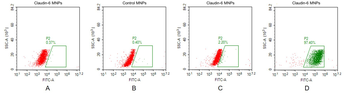
FACS Analysis:
A. Negative Control 1: CLDN6 full length membrane nanoparticles samples were stained only with Goat anti-human lgG 488 secondary antibody.
B. Negative Control 2: Control membrane nanoparticles samples were stained with anti-CLDN6 antibody (orb1291233) at 2 μg/mL, followed by Goat anti-human IgG 488 secondary antibody.
C. Negative Control 3: CLDN6 full length membrane nanoparticles samples were stained with anti-GPRC5D antibody (an irrelevant antibody) at 2 μg/mL, followed by Goat anti-human IgG 488 secondary antibody.
D. CLDN6 full length membrane nanoparticles samples were stained with anti-CLDN6 antibody (orb1291233) at 2 μg/mL, followed by Goat anti-human IgG 488 secondary antibody.
Human CLDN18.2-Nanodisc Expressed via VLP Platform (orb1291767)
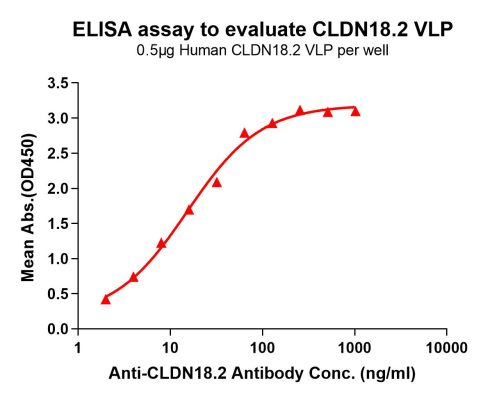
ELISA Assay: Flagged tagged human CLDN18.2 VLP (orb1291767) can bind to Anti-CLDN18.2 monoclonal antibody (Zolbetuximab; IMAB362) and the EC50 is 15.37ng/ml.
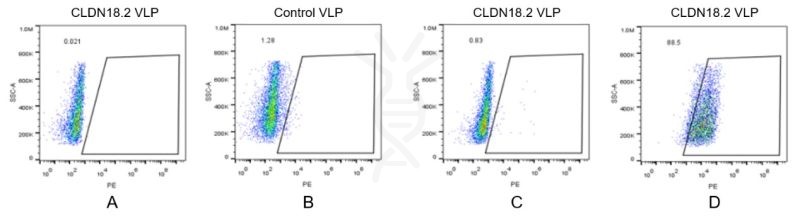
FACS analysis of CLDN18.2 VLP:
A. CLDN18.2 VLP stained with Goat anti-human IgG Fc-PE secondary antibody.
B. Control VLP stained anti-CLDN18.2 antibody (Zolbetuximab; IMAB362) followed by Goat anti-human IgG Fc-PE secondary antibody.
C. CLDN18.2 VLP stained with anti-BCMA antibody (irrelevant antibody) followed by Goat anti-human IgG Fc-PE secondary antibody.
D. CLDN18.2 VLP stained with anti-CLDN18.2 antibody (Zolbetuximab; IMAB362) followed by Goat anti-human IgG Fc-PE secondary antibody.
Human CD24 full length protein via Exosome(EXO) Platform
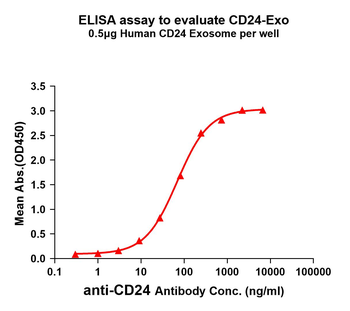
ELISA Assay: ELISA plates were pre-coated with 0.5 μg/per well purified human CD24 exosome. Serial diluted Anti-CD24 monoclonal antibody solutions were added, washed, and incubated with secondary antibody before ELISA reading. From above data, the EC50 is 69.61 ng/ml.
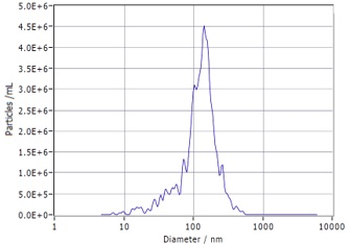
Nanoparticle Tracking Analysis of CD24 exosomes
Detailed Comparison: Purified Membrane Platforms
Synthetic Nanodisc | MSP Nanodisc | PeptiNanodisc | Detergent | |
|---|---|---|---|---|
Membrane Stabilizer | Polymere | MSP | Peptide | Detergent |
Nanodisc Diameter | ~10nm | 7-17nm | Theoretically unlimited | Theoretically unlimited |
Phospholipid Source | Natural Phospholipids | Synthetic Phospholipids | Small amount of natural phospholipids | None |
Preparation Method | Addition of polymer materials in cell membrane extract | No cell expression system / detergent purification and assembly | Direct addition of peptides after detergent | Add detergent to replace phospholipids, then purify |
Contains Detergents? | No | Possible trace amounts | Possible trace amounts | Yes |
Quantitative Target Protein? | Yes | No | No | Yes |
Applications | Immunoassay / ELISA / SPR / Cryo-EM | Immunoassay / ELISA / SPR / Cryo-EM | ELISA / SPR / Cell experiments / Cryo-EM | ELISA / SPR / Cryo-EM |
Detailed Comparison: Non-Purified Membrane Platforms
Name | Advantages | Disadvantages | Application |
|---|---|---|---|
Nano Membrane Particles (MNP) |
| Difficult to quantify target protein precisely, mostly total protein quantification. | ELISA / Phage Display / Immunoassay / CAR-T Positive Rate Detection |
Virus-Like Particles (VLP) |
|
| ELISA / Phage Display / Immunoassay / CAR-T Positive Rate Detection |
Exosomes (EXO) |
|
| ELISA / Phage Display / Immunoassay / CAR-T Positive Rate Detection |
Custom Protein Synthesis Service Workflow
From genetic design to delivery, our streamlined workflow ensures high-quality, reproducible custom protein production.
1. Project Design
Sequence analysis, codon optimization, and vector construction.
➔
2. Expression
HEK293 serum-free mammalian cell culturing & transfection.
➔
3. Preparation
Assembly into Nanodiscs, VLPs, MNPs, or ECD purification.
➔
4. Quality Control
Rigorous structural and functional validation protocols.
➔
5. Delivery
Secure shipping with comprehensive QC documentation.
Request a Custom Service Quote
Fill out the form below to discuss your specific membrane protein target and receive a customized project proposal from our scientific team.